One zip each, and it opens two doors: unzip it and you have the site, running in a browser with nothing installed; hand the same zip to a design tool and you have the system behind it — tokens in the W3C format, a written guideline, a component fixture and preview pages. The code is MIT. The photographs, where a kit has any, are CC0. Nothing to sign up for.
Texture · version 1.0.0
Facets
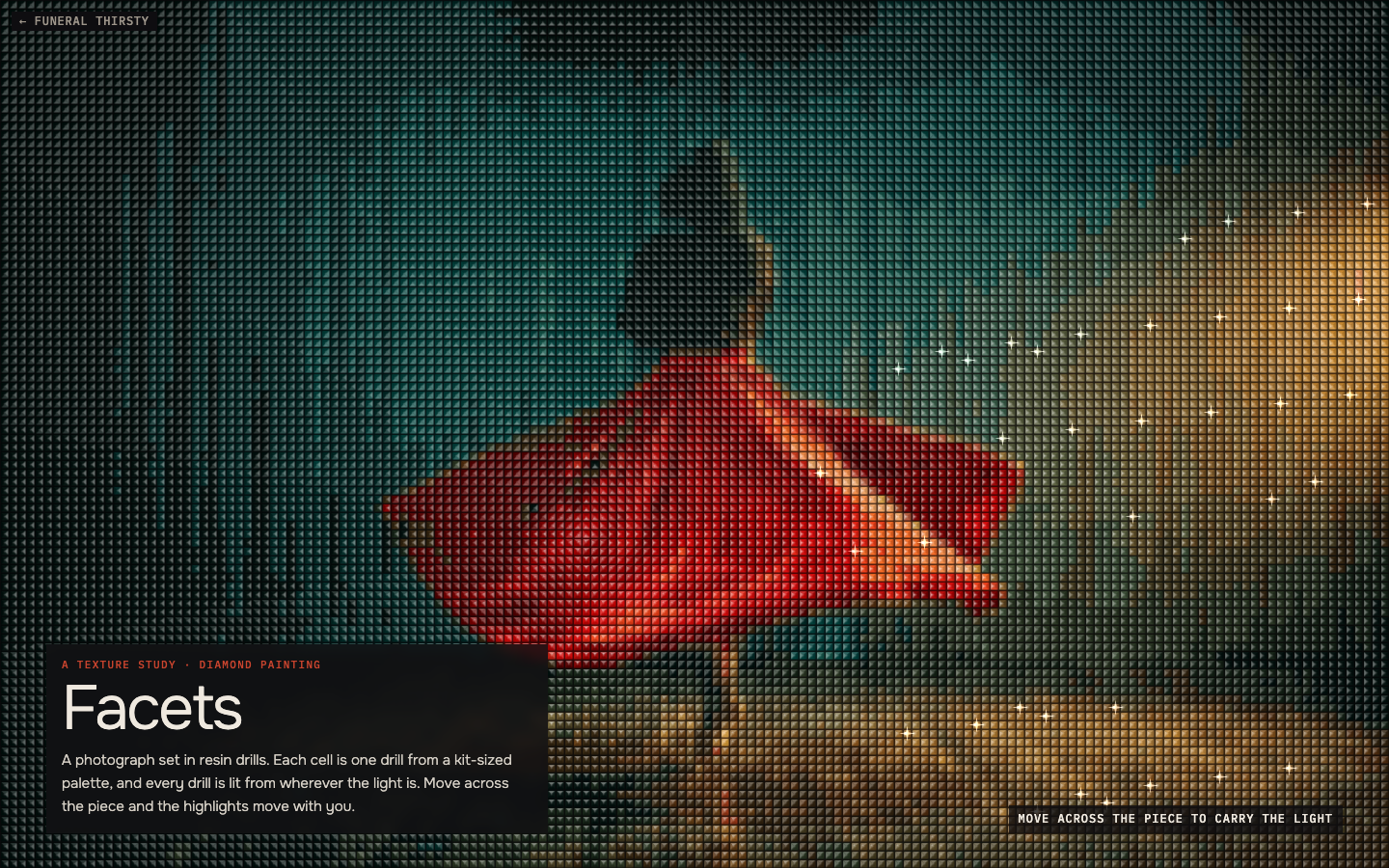
A photograph set in resin drills that catch a moving light. One script, one attribute on a canvas, and your picture becomes a diamond painting that sparkles as the visitor moves.
The site itself, the Facets page rebuilt from the kit, as index.html
The engine, facets.js, with every option documented
A drop-in demo and three component previews
Tokens as JSON and CSS, a guideline, and manifests for both Claude Design and Open Design
Two sample photographs and the mono face, with their licenses
Use the siteUnzip and open index.html: the study itself, running, with nothing installed.
Import the systemThe same zip, read as a design system: tokens, the guideline, the component fixture and preview pages.
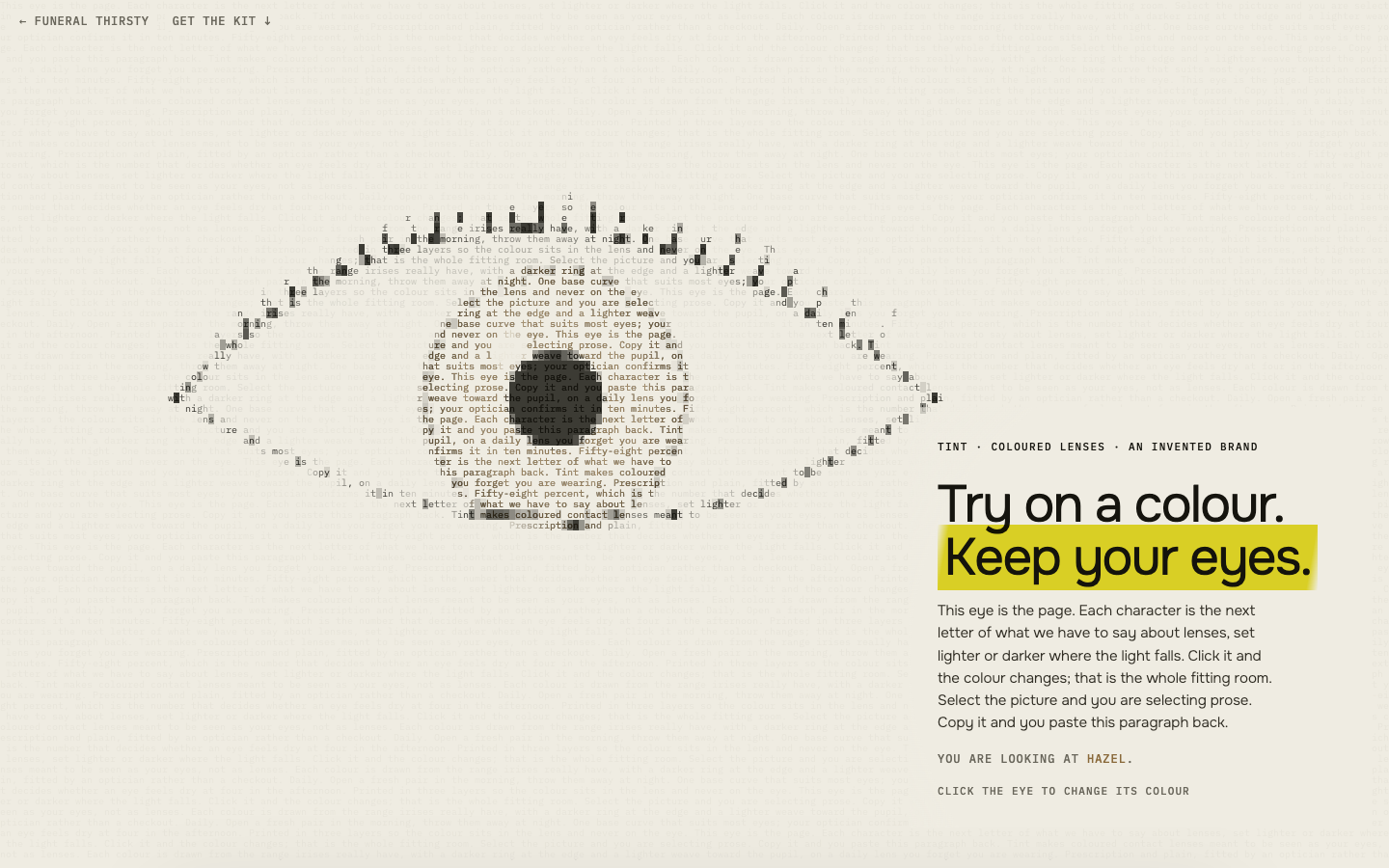
An eye made of the page's own words. Every character is the next letter of what the page says, set lighter or darker where the light falls; it follows the pointer, blinks, and changes colour when you click it. There is no image file anywhere in it.
The site itself, the Tint page rebuilt from the kit, as index.html
The engine, tint.js: three elements and one attribute
A drop-in demo and three component previews
Tokens as JSON and CSS, a guideline, and manifests for both Claude Design and Open Design
The mono face with its license — and no photographs to license at all
Use the siteUnzip and open index.html: the study itself, running, with nothing installed.
Import the systemThe same zip, read as a design system: tokens, the guideline, the component fixture and preview pages.
The Standard, Second Set, Ripple, Rain, and the rest.
Each study becomes a kit the same way: the site and its design system in one folder, generated from the same files the study runs on, so the two can never drift apart. Facets and Tint are the first two; the others follow as they are packaged.